Visit Company
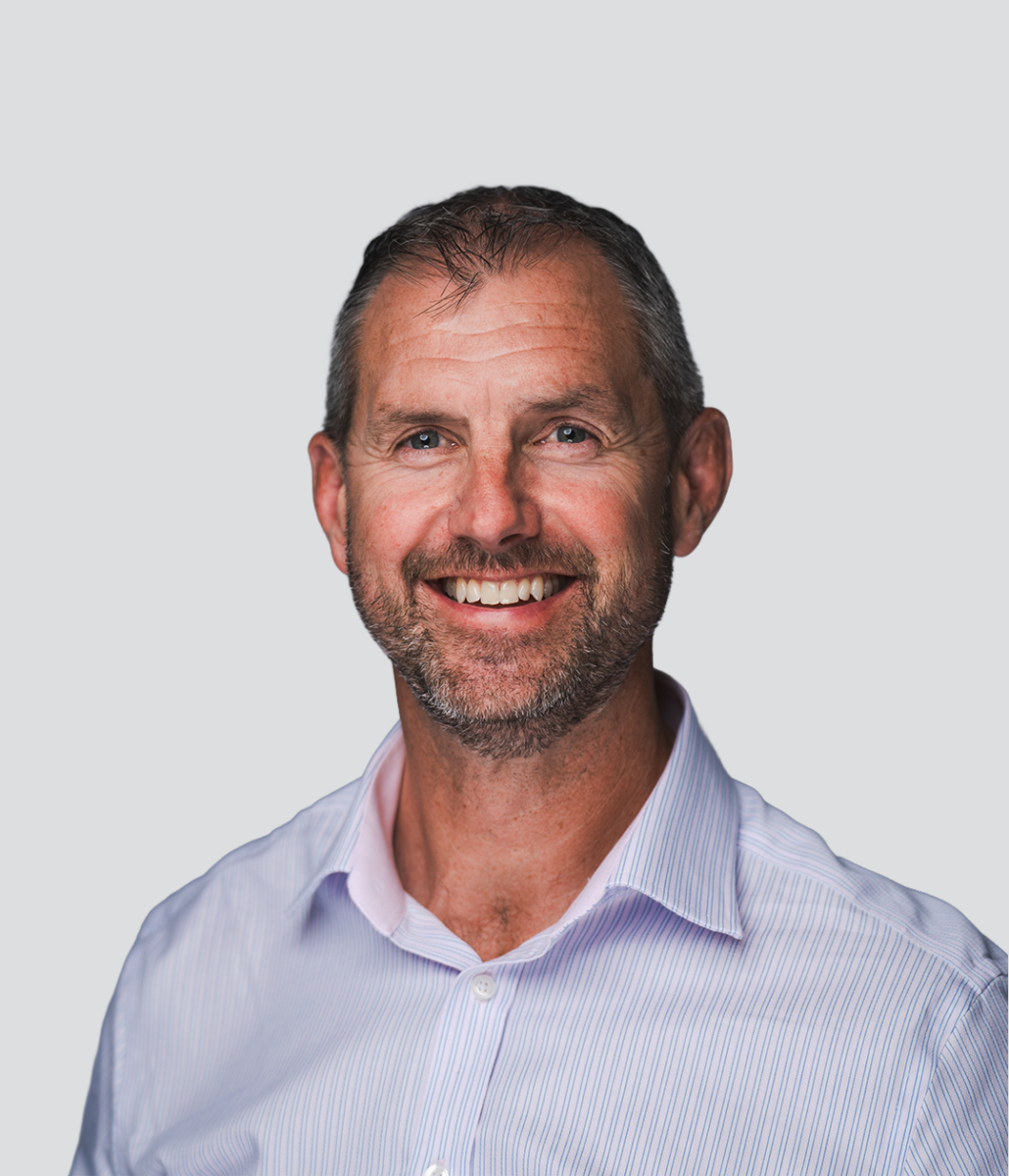
oritain.comSome leaders are shaped by success. Alyn Franklin was forged by something harder won – a set of values built in the heat of real consequence.
Long before he became CEO of Oritain, Alyn faced the kind of moment that defines a leader’s character. As finance director of a FTSE 250 business, he uncovered serious, endemic financial misreporting. He raised it. He was ignored. And then he watched 8,000 colleagues’ livelihoods put on the line as the business spiralled into administration.
“I had my first, and only, panic attack,” he says.
What followed wasn’t a retreat. It was fourteen years of rebuilding – saving, cleaning up, reinventing – through near bankruptcy, four exits, and multiple management changes.
What he carried out the other side wasn’t just experience. It was a leadership philosophy, stress-tested in real time and grounded in clear principles: that candour matters, that integrity isn’t negotiable, and that the courage to see around corners and act on what you find is critical.
When he left the role in 2024, he started as Oritain’s new CEO two weeks later. Some leaders wait for the right moment. Alyn tends to create it.
The Importance of Provenance
The Oritain team are global experts in origin verification. They use statistical modelling and a proprietary scientific approach to verify the provenance of products like cotton, leather, timber, and more. Put simply, companies with global supply chains need to know if a product or raw material is genuinely from where people say it’s from – Oritain helps them achieve that.
Suppliers are often incentivised to misrepresent the origin of an item for cost reasons. Oritain helps customers like Next, Patagonia, and Supima, know the truth with precision. In doing so, they help their clients, whether they are buyers or suppliers, ensure supply chain transparency, which mitigates risk.
It’s a problem that is only getting worse, too. Oritain’s 2026 Global Supply Chain Intelligence Report found that 90% of the brands analysed in 2025 recorded at least one prohibited cotton result, up from 64% in 2024.
“A significant amount of cotton fails to match declared origin,” according to Alyn. “We physically analyse a commodity to verify where it came from, rather than triangulating indirect proxy data.”
Historically, companies have benefitted from the plausible deniability of fuzzy proxy data. But regulators are now catching up. From Q4 2027, the EU’s Forced Labour Regulation (EUFLR) will not just ban products made with forced labour, but ensure their removal and destruction. Items will be physically taken down from shelves if needed.
Within this regulatory environment, Oritain is set to become an essential intelligence layer for businesses with complicated supply chains. Which is welcome, as the industry has been a hard one to crack: ridden with complexity, inertia, antiquated systems and incentive misalignment.
Alyn was brought in as Oritain’s CEO in December 2024 to navigate these challenges.
“In my first week, I spoke to every employee across all time zones. I needed my team to quickly understand who I was, what I valued and what I would be asking of them. I acknowledged that some of them may think I was a bit of a lunatic at times. But I needed the benefit of the doubt if we were going to succeed together.”
Early in his Oritain tenure, he took bold, difficult decisions, including changing his senior team and pivoting the company’s business model. Oritain moved from transactional testing, where customers would order individual projects, to an annualised membership.
The customer base was widely receptive to the idea. It led to ongoing relationships with clients, transforming cash flow, standardising delivery, and turning Gold Oritain membership into a badge of honour for organisations taking compliance seriously. This was a year after Highland Europe had invested, and Alyn credits their team for giving him the autonomy needed to make what now seems a very successful pivot.
Superstars come from the front line
Alyn is quick to point out that none of this was done alone. The transformation became possible because of the remarkable talent that emerged when given the space to shine.
“Superstars come from the front line. Find them and give them the room. You need to travel to people, spend time with them, and prioritise development from within.”
He recalls interrupting one of his team members mid-presentation because they were reading from slides, verbatim.
“I’m sorry to stop you, but let’s just talk. Ignore the slides, if there’s one thing you want me to remember, what is it?”
This anecdote captures his approach to people management. It’s built on candour, vulnerability, and integrity, qualities he doesn’t just talk about but actively models. Without pause, Alyn shares the maxims he abides by as a leader:
“You can never be too in the detail.”
“Do it properly or not at all.”
“Help each other. That will help the customer.”
“Be predictable in your values, even when everything else is uncertain”
“No one is better than anyone else. I don’t have any God-given rights just because I’m CEO.”
There is a humility to his leadership that speaks to where he came from. Alyn grew up in Southwest Wales; a part of the UK not known for forging prolific technology CEOs. He is an accountant by training, having worked at Arthur Andersen, and spent the early years of his career in a national sales role for Coors Brewers.
“I sold beers to sports clubs in the day and to nightclubs in the evening.” He believes that combination – the rigor of accounting and the instincts of sales – gave him the necessary foundation executive leadership demands.
Services Are Sexy
When asked for his more counter-consensus opinions, Alyn proclaims “services are sexy!”.
“I’ve been told for 15 years by experts and investors to purge services and go pure SaaS. Then at Oritain, everyone told me to go full software and sell our science labs. I bought two more instead.”
His conviction is that the real value lies in domain expertise, customer proximity, and primary data generation. And you cannot generate primary data if you’re outsourcing the actual work.
This long-held view of his seems prescient in the era of the ‘Saaspocalypse’, where AI-enabled software generation threatens the SaaS business model. Oritain’s ownership of science labs and proprietary methodology act as defensible moats in a world of instant generation and mimicry.
Alyn has a second view that runs against the room. Ask him about ESG, and he refuses to write the obituary others seem to be drafting.
He believes the sustainability agenda didn’t stutter because of its underlying logic, but because it decoupled from the hard economic arguments.
“I don’t think the ESG agenda is dying. It’s being relabelled and re-anchored. People are still thinking a lot about it and taking steps, they’re just maybe not as vocal about it as they used to be.”
He’s clear-eyed about the fact that cultural and political attitudes shape how compliance is perceived. But he’s genuinely optimistic that governance will continue to be prioritised – because the underlying logic hasn’t changed.
“A sustainability function on its own is self-defeating. But even hyper capitalists think about risk. We’ve also seen when it comes to origin, it just makes good business sense to know where you’re sourcing from.”
In this modern context, where supply chain resilience and reputational risk are more important than ever, Oritain is poised to capitalise. Knowing the origins of a product is fast becoming a business necessity not a luxury – and Alyn is the kind of leader hard wired to meet that moment.
This is the next mission Alyn finds himself on. In his own words, “do it properly or not at all.”